
These mobsters come into the yard and eat everything in sight that was put out for the favorite birds. But don't take a shotgun to them, they sure do eat a lot of grubs in the lawn and they are the only birds that will eat adult Japanese beetles.
 |
As their name implies, European starlings are not native to this continent, but they have adopted it wholeheartedly. Since 1890 when a flock of 100 of them was released in Central Park in New York City they have aggressively expanded their range to include virtually the entire country. While they are viewed as nuisances and interlopers by many, they are prodigious pest insect eaters. They tend to gather in huge noisy flocks with blackbirds and cowbirds to roost and feed in cities, parks, farms, tree groves, fields and open country. Their collective squeaks, clicks, chatters and whistles are audible for quite a distance.
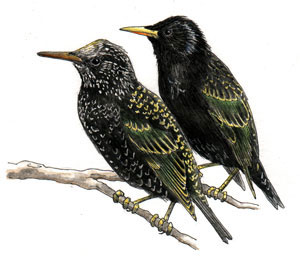
Starlings may be low on the songbird popularity list also because they appear drab and have no manners. A bit rowdy, they lack class as well as handsome color. However, they have a certain beauty if you look more closely. Stubby and short-tailed, these dusky birds are 7½ to 8½ inches long. Their dark plumage is richly flecked in white in the winter, but wear and tear on the feathers breaks off these white tips and by spring breeding time, starlings are wearing just shiny dark feathers with an iridescent green tinge. They sport yellow bills in spring and summer, darker ones in the winter.
