
 |
How To Use This Problems Section
The chart is organized to give you a quick and dirty summary of the possible symptoms that you may encounter. Those problem causes for which we have full files will be linked to those files. Those causes with no link will have a paragraph below the chart helping you deal with that particular problem.
| Solving Geranium Problems | |
|---|---|
| Symptom | Probable Cause |
| Small Holes In Unopened Buds | Geranium Budworm |
| No Blossoms | Overfeeding; Excessive Heat |
| No Blossoms Indoors | Poor Environment |
| Lower Leaves Have Yellow Edges | Needs Fertilizer |
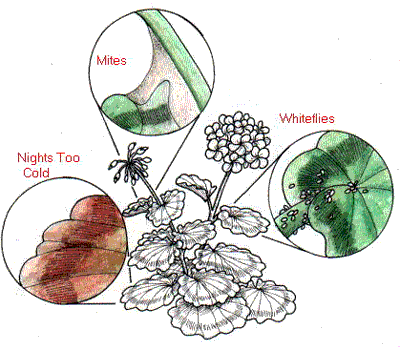
| Leaves Deformed | Mites |
| Leaves Turn Reddish | Nights Too Cold |
| Spindly Plant Growth | Low Light |
| Buds Dry Up; Drop Off | High Humidity or Overwatered |
| Pale or Yellow Spots; Leaves Distorted | Aphids |
| Plant Grows Poorly | Mealybug |
| Plant Weakens; Leaves Turn Yellow | Whitefly |
| Leaf Spots of Various Sizes; Leaves Wilt; Stems Rot | Leaf Spot or Rot, a fungal disease |
| Leaves Patched or Coated with White | Mildews, fungal disease |
| Foliage Turns Yellow | Root rot, bacterial disease |
| |
|
Geranium Budworm
Small Holes In Unopened Buds Signals Geranium Budworm
Also known as the tobacco budworm, the geranium budworm is a caterpillar that tunnels into unopened buds and eats them from the inside out. Then when they open, the flower petals are riddled with holes. To prevent the spread of the worms into healthy buds remove any buds showing tiny holes and nearby brown specks. Handpick any visible worms, which may be greenish, tan, reddish or black depending somewhat on the color of their host flower. They have 2 pale stripes running parallel to each other the length of their bodies.
For heavy budworm infestations spray Bt (Bacillus thuringiensis) on the bud surfaces where budworms are feeding. They will ingest the bacteria, which only harms caterpillar type pests, sicken, stop eating, and die within days. For chronic budworm problems, cover the soil with landscape fabric to block the larvae (the worms) from entering the soil where they overwinter and become moths. Plant geranium seedlings in holes cut through the fabric. Ivy geraniums are less susceptible than other geranium types.
Excessive Heat
No Blossoms Due to Overfeeding or Excessive Heat
Overfeeding stimulates lush vegetation but no flowers on geraniums. Water the plants generously so that the ground is thoroughly soaked two or three days in a row so that the excess nutrients will be diluted and carried past the geranium roots deeply into the soil. Do not fertilize for the rest of the growing season.
While zonal types of geraniums thrive on sun and hear, ivy and regal types of geraniums stop blooming when subjected to the extremely high temperatures typical of hot sunny afternoons in warm climates. Try to local them where they will get some shade in the afternoon. No Blossoms Indoors Due to Poor Environment
There are three reasons why geraniums may be reluctant bloomers indoors in the winter: 1). too much nitrogen, 2). too little light, 3). too little difference between day and night temperature. Stop feeding the plants for awhile and find a better location for them. It may be necessary to place them under lights to encourage blooming in the winter.
Low Nutrition
Lower Leaves Have Yellow Edges Signals Low Nutrition
If their bottom leaves have yellow edges, geraniums probably need some food. Spray their foliage with liquid fertilizer, but do not exceed the dilution prescribed on the container. Feed them every two weeks until the symptoms disappear.
Nights Too Cold
Leaves Turn Reddish When Nights are Too Cold
Leaves of geraniums placed outside too early in the spring may redden when the plants are first planted or set outside. This is caused by a sudden chill, usually at night. Delay moving your plants outside until nighttime temperatures remain reliably above 40°F.
Low Light
Spindly Plant Growth Is Due To Low Light
Geraniums become spindly because of a number of environmental problems. Insufficient light is a common cause. Failure to pinch back long stems, excessive feeding and watering and overcrowding will also cause geraniums to look leggy and to fail to thrive.
Overwatering
Buds dry up, drop off Due to High Humidity, Overwatering
Sometimes, especially on potted geraniums, the unopened buds dry up and drop off before they have a chance to open. This may be because they are too moist. Try to provide a drier climate for them. Wait a bit longer between watering, especially if they are in containers.
Root Rot
Root rot is caused by fungi that live in the soil. Typically, these rots attack geranium stems at or near the soil level. Plant foliage turns yellow, wilts, and dies. Root systems rot, causing the geraniums to topple over. Remove and discard infected plants, or cut away affected plant parts with a clean, sharp knife or razor blade. Disinfect tools after use. Keep the garden clear of old plant debris and keep mulch away from stem bases. For long term prevention, lighten heavy soil with a mixture of perlite, vermiculite or peat moss to improve its drainage. Avoid overwatering. Space plants further apart to prevent crowding. Use sterile commercial soilless potting mix in containers.
