
When a forsythia bush doesn’t bloom or its leaves start to fade, it can make the whole yard look a little tired. Don’t worry, these forsythia problems are common and easy to fix once you know what’s behind them. Whether your forsythia bush is not in bloom or showing leaf spots, we’ll walk you through what’s normal, what’s not, and how to bring that cheerful yellow back to your garden.
Understanding Common Forsythia Problems and How to Manage Forsythia Fungus
Forsythias, with their vibrant yellow blooms, are a staple in many gardens. However, like any plant, they are susceptible to a range of issues that can hinder their health and aesthetic appeal. The lush forsythia foliage is a sight to behold in spring, bursting with vibrant green leaves that contrast beautifully with its yellow flowers.
This section delves into common forsythia problems, including the troublesome forsythia fungus, providing gardeners with practical advice on identification, prevention, and control. Whether you're dealing with fungal diseases or other growth challenges, our insights will help you maintain your forsythias in prime condition, ensuring they continue to brighten your landscape season after season.
In addition to common pests and problems, forsythia diseases can significantly impact the health and vigor of these shrubs. Regular monitoring and timely treatment are crucial to prevent diseases from spreading and causing irreversible damage
 |
Tips on how to use this section:
The symptoms of the most common problems are in the left column of the chart. In the right column are the probably causes of those symptoms. For those problems for which there is detailed information in a different part of Yardener’s Helper, the name of the problem is linked to a detailed file. For those problems for which there are no additional files, the discussion is found in the paragraphs below the chart.
| Problems of Forsythia | |
|---|---|
| Symptoms | Probable Causes |
| Shrub Branches Root in Soil | Natural Habit |
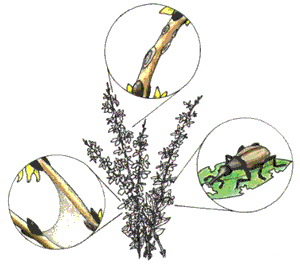
| Upper surfaces of lower leaves will be stippled with small yellow dots or red spots. The leaves, their stalks, and adjacent stems may be distorted or swathed in fine webbing. Check for mites on the lowest leaves of forsythias. | Mites |
| This problem (scale) appear as bumps on forsythia twigs, usually on main stems or in the crotches where leaf stems join them. As scale suck on cell juices, leaves and stems look pale and limp. They secrete a sticky honeydew which fosters the growth of an unattractive black, sooty mold on leaves. | Scale |
| Weevils feed on the edges of forsythia leaves during the day. They sometimes devour the whole leaf except for the midribs and large veins. Weevil grubs (larvae) in the soil often attack the roots, endangering the shrub. | Weevils |
| A forsythia whose roots are infested with nematodes looks sickly, wilted or stunted. Its foliage is yellowed or bronzed. It will decline slowly and die. Upon inspection the root system appears poorly developed, and even partially decayed. Roots may have knots or galls on them. Evidence of nematode activity may be most apparent in hot weather, when the shrub foliage continues to droop after the heat of the day has passed. | Root Knot Nematodes |
| Tumor-like Swellings on Trunk or Stems | Phomopsis Gall |
| Flowers and Twigs Shrivel | Twig Blight |
| Sunken Spots; Brown Spots on Leaves | Fungal Diseases |
| Base of Stems; Roots Gnawed | Rodent Injury |
Shrub Branches Rooting in Soil Is Natural for Forsythias
The tips of forsythia's arching branches that touch the soil often take root. This natural habit can be managed by either pruning branch tips to prevent rooting or by clipping off the rooted sections from the branches and encouraging them to develop as new shrubs. These sections can be replanted elsewhere on the property to expand your forsythia display or refresh older plantings.
Additionally, transplanting mature forsythia shrubs can invigorate their growth and help reorganize your garden's layout. Regular pruning not only helps control the rooting of branches but also maintains the health and aesthetics of forsythia branches, preventing overgrowth and promoting robust blossoms.
Tumor-like Swellings on Trunk, Stems are Phomopsis Gall.
A fungus infects forsythia shrubs through wounds in the tender bark on its stems and stimulates cells to form tumor-like swellings (galls) with irregular rough surfaces there. To prevent this disease, do not plant any forsythia shrub that has suspicious visible galls on the stems.
Destroy any heavily infected plants that you may have already. If only a few galls are present, cut off and destroy the affected stems. Sterilize pruning tools afterward in a solution of household bleach and hot water to avoid spreading the disease. Clean up the summer mulch after the forsythia drops its leaves and replace it with fresh for the winter.
Flowers and Twigs Shrivel Due to Twig Blight.
A common problem called forsythia twig blight is a type of forsythia fungus that causes dieback on twigs and stems. It often starts when the black fruiting bodies of the fungus form on the surface or inside the infected branches. These spots spread from the blossoms and flower stalks into the twigs, leading to full forsythia dieback if left untreated.
To stop it, prune and destroy all infected twigs and stems as soon as you notice them. Improving air circulation helps too, trim nearby shrubs and remove older wood from the plant. Good spacing and airflow reduce moisture, which is what encourages most forsythia leaf blight and other fungal problems.
For more information see the file on Controlling Fungal Disease.
Sunken Spots, Brown Spots on Leaves from Fungal Diseases.
Leaf spot diseases caused by various fungi sometimes attack forsythia. They are distinguished by yellow, brown or black dead blotches on the leaves. Often these spots come together to form larger patches of dead tissue. Anthracnose makes moist, sunken spots with fungal fruiting bodies in the center.
These leaf spots may run together, resembling a blotch or blight. The dead areas border the veins or are between larger veins. Sometimes the ends of new forsythia shoots die back several inches. Pustules containing pinkish spores appear. Dieback and defoliation may occur in severe cases.
Most fungal infections are not life threatening to mature shrubs, just unattractive. Gather and destroy fallen leaves and prune away any diseased branches, even if it means cutting the entire shrub back. Thin old stems to improve air circulation. Maintain plant vigor by feeding and watering as recommended.
To protect healthy leaves from infection, spray them with a garden sulfur fungicide according to label directions. Lay fresh mulch for winter. If anthracnose is a chronic problem dig up and destroy the forsythia and replace it with a different kind of shrub that is resistant to this disease. Disinfect all tools in a solution of hot water and household bleach.
If your forsythia is not in bloom, it may require more sunlight or pruning to remove old wood, which can invigorate flowering.
For more information see the file on Controlling Fungal Disease.
Base of Stems, Roots Gnawed Due to Rodent Injury.
Small rodents sometimes nest in winter mulch near forsythia stems and gnaw at plant tissues. This injury reduces plant vigor and permits disease organisms to invade the shrub. Do not pile mulch against stems. Wait until the ground freezes before spreading winter mulch so that mice, voles and other rodents are forced to find other nesting areas.
Fortunately for gardeners, deer typically avoid forsythia, making them an excellent choice for areas with high deer populations.
For more information see file on Dealing With Mice and Dealing With Voles.
FAQ: Ensuring Pet Well-being Around Garden Plants
Is forsythia poisonous to dogs?
No, forsythia is not poisonous to dogs. The plants are entirely safe as all parts, including the flowers, leaves, and branches, exhibit no forsythia toxicity. While the plant's components are non-toxic, the flowers may have a naturally bitter taste, which typically discourages dogs from eating them.
Nonetheless, if your dog is particularly curious or has a habit of nibbling on garden plants, it's prudent to keep an eye on them. This vigilance helps ensure they don't ingest large quantities, which, although not toxic, might still cause mild stomach upset due to the unusual material.
Why is my forsythia not flowering?
There are several factors that could be preventing your forsythia from flowering, particularly issues related to light exposure and nutrition. Forsythia plants typically require ample sunlight to thrive and produce blooms; ideally, they need about six hours of direct sunlight each day.
If your forsythia is not flowering, first assess any changes in its environment. Has there been new construction, or have trees grown larger, casting more shade on your forsythia? Insufficient light is a common culprit behind the lack of blooms.
Additionally, the balance of nutrients can significantly affect flowering. An excess of nitrogen, often found in general-purpose garden fertilizers, can lead to lush foliage at the expense of flowers. To encourage your forsythia to bloom, consider using a specialized forsythia fertilizer that promotes floral growth rather than foliage. Such fertilizers typically have a higher phosphorus content compared to nitrogen, helping to stimulate bud production.
Lastly, ensure your plant is not overly stressed or competing for resources. "Forsythia Spring Glory," a variety known for its robust blooms, particularly benefits from well-timed pruning—immediately after the blooming season—and adequate feeding. Pruning old and overgrown branches can rejuvenate your forsythia and encourage the growth of flowering buds for the following season.
By addressing these key factors—light, nutrition, and plant health—you can help your forsythia bloom beautifully each spring.
Do forsythia lose their leaves?
Yes, forsythia shrubs are deciduous, which means they naturally lose their leaves annually.
During the fall, you will notice the forsythia leaves turning brown and yellow before they are shed, marking the transition into the colder months. This leaf drop typically occurs late in the fall season, allowing the forsythia's striking bare branches to stand out during the winter, setting a dramatic backdrop for its vibrant early spring blooms.
The change in leaf color to shades of yellow, apricot, and sometimes red enriches the garden's autumn palette. It's part of the forsythia's natural cycle to prepare for its spectacular spring performance, where flowers bloom on bare wood. If your forsythia's leaves are dropping at unusual times or you notice signs of distress such as discoloration or spotting, it might be indicative of health issues.
Factors such as over or under-watering, drastic temperature changes, or diseases could be stressing the plant. Regular pruning and careful monitoring of soil and environmental conditions can help maintain the health of your forsythia, ensuring it thrives and rejuvenates each year.
Is forsythia invasive?
Forsythia is not typically classified as invasive, meaning it does not aggressively spread or outcompete native species in most regions. However, the characteristics of forsythia roots can be somewhat invasive in garden settings because they spread widely and can occasionally take root from dropped branches, leading to unexpected growth beyond intended areas.
Although not on official lists of invasive species, forsythia's ecological impact is considered limited. It provides abundant flowers early in spring but does not offer significant ecological benefits, such as supporting a diverse range of wildlife or attracting many pollinators.
This has led some experts to describe forsythia as ecologically dysfunctional, suggesting that while it may not harm native plant populations directly, it does little to enhance biodiversity.
For those interested in gardening with ecological benefits in mind, considering native plants that provide greater support to local wildlife might be a better option. While forsythia's bright yellow blooms are eye-catching, other native plants can offer similar visual appeal along with higher ecological value.
What are the signs that a forsythia bush is dying?
Recognizing the signs of forsythia bush diseases early is crucial for saving the plant and preventing further issues. A dying forsythia may show several symptoms affecting its leaves and stems.
Leaf Symptoms:
- Yellowing or Browning: If your forsythia leaves are turning yellow or brown, it could point to watering problems, nutrient deficiency, or early signs of forsythia leaf problems such as root rot. Nutrient deficiencies, particularly a lack of essential minerals, can also cause leaf discoloration.
- Wilting: Forsythia wilting leaves often happen when soil stays too wet or too dry for long periods, or when a fungal infection spreads through the roots..
- Blotchy Brown Spots: Brown spots on forsythia leaves may signal fungal diseases that cause forsythia leaves to turn brown and drop early.
Stem Symptoms:
- Brittle or Dead Branches: Forsythia stems that snap easily or show signs of dryness and brown discoloration under the bark are likely dead, often a result of fungal infection or environmental stress.
- Bark Changes: Look for darker, cracked, or blistered bark, especially where cankers might be present, indicating more severe health issues.
General Plant Health:
If you’ve wondered "why
are my forsythia leaves turning brown or why growth has slowed", these are common problems with forsythia that can often be corrected with proper pruning and balanced watering. When forsythia leaves turn brown, dry edges or dull color usually mean stress, not necessarily disease, but checking soil drainage can help prevent worse issues.
Proper care and steady watering usually restore the bright green color and keep your forsythia bush healthy through the season.. Pruning affected branches, ensuring good air circulation, and adjusting watering and feeding practices are essential steps to help revive a struggling forsythia bush.
Why are my forsythia leaves curling?
Curling leaves on a forsythia bush often point to stress from heat, dry soil, or pests such as aphids. When the weather turns hot and dry, the plant may curl its leaves to conserve moisture. Check the soil first, if it’s too dry, give your shrub a deep watering. If you notice sticky residue or tiny insects under the leaves, rinse them off with a gentle spray of water or insecticidal soap.
What is eating my forsythia leaves?
If you notice holes, notches, or spots on your forsythia leaves, the damage is likely from small insects such as aphids, spider mites, weevils, or four-lined plant bugs.
Each pest leaves its own clue:
-
Notched or scalloped edges usually mean weevils are feeding along the leaf edge.
-
Sunken brown spots point to four-lined plant bugs.
-
Stippled or bronzed leaves with fine webbing suggest spider mites.
-
Distorted or yellowing leaves often mean aphids are sucking sap and leaving sticky residue.
To manage these pests, rinse the leaves with a strong spray of water, apply insecticidal soap or neem oil, and encourage ladybugs or lacewings to help keep populations down. Avoid spraying flowers and apply treatments in the evening when pollinators are resting.
To wrap..
A healthy forsythia bush can brighten your yard for many years, even after a tough season. Most diseases of forsythia start small, so keeping an eye on early changes in color or growth makes all the difference. With regular pruning, well-drained soil, and timely care, these shrubs usually bounce right back. If your forsythia still looks weak, take a look at our guide on pruning and fertilizing forsythia shrubs for simple steps to help them thrive again.
