
Protection Underground
Sure, trees go dormant during the winter, but that doesn’t mean they don’t need any help from you, especially young trees. Stress from severe winter weather (extreme cold, harsh wind and bright sun) can cause bark splitting and separation of the tender new wood just beneath, as well as dieback and browning of leaves. Winter damaged trees are also more vulnerable to attack by disease and insects. Follow these guidelines to prepare trees for the winter:
Mulch around the trees, as described earlier. Mulches protect the soil from the effects of freezing and thawing, which disturbs shallow tree roots.
Water deeply just before the ground freezes. Use slow drip irrigation to help fight winterkill.
Protection Aboveground
If a young evergreen tree or deciduous tree is located where heavy winds are common, set up windbreaks around evergreen trees using some stakes and natural burlap. If you don’t have burlap, white polyspun floating row cover makes a good substitute. Snow fencing also makes an excellent wind barrier. Avoid using plastic sheeting. It prevents air circulation and concentrates heat from the sun.
For evergreens, an optional step is to spray evergreen foliage with an anti transpirant spray. This product forms a clear, flexible film on plant surfaces, thereby reducing evaporative water loss by up to 80% while allowing gas exchange. As a bonus, it prevents fungus spores from becoming established on the foliage, thus cutting down the risk of disease. Apply when the air temperature is above 40° F and before the ground freezes hard. Anti transpirants are available at garden centers.
If you have young trees and we get a snow accumulation of more than 3 inches, you might want to clear the snow away from the base of each of those trees to keep mice or voles from tunneling under the snow cover to chew on the bark.
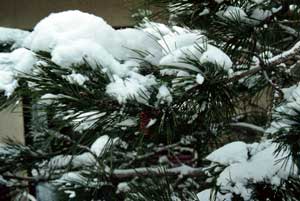 |
When The Snowstorm Hits Conifers - When snow accumulates on the branches of conifer trees, the branches can be bent fairly far down from the weight of the snow. If you want to remove the snow DO NOT BRUSH THE SNOW IN A DOWNWARD MOTION! If you brush snow downward you may break the branch. Always brush upward from underneath the branch to remove snow safely.
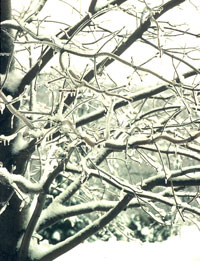 |
When the Ice Storm Hits Any Tree - If you experience an ice storm that coats the branches of your conifer or leafless deciduous tree, DO NOT DO ANYTHING TO REMOVE THE ICE! You will do more damage than good. Leave the ice and let it melt naturally as the weather warms up.
To protect the bark of younger trees from such hazards as sunburn, boring insects, and injury by small animals, some experts say it’s a good idea to wrap the trunks with protective material such as natural burlap or a commercial tree wrap, which is made of paper and asphalt. Wrapped snugly from the ground up to the first major branches, the tree wrap expands along with the growth of the tree, and is said to discourage sapsuckers and other woodpeckers from drilling into the trunks. On the other hand, some experts say that tree wraps injure trees by stopping photosynthesis and gas exchange through the bark surface and by giving bugs and fungi a place to breed. In any event, the tree wrap should be removed after 2 or 3 seasons.
Did You Know?
An old technique, painting lower tree trunks with whitewash, has been shown to reduce trunk surface temperatures on young tender-barked trees by 10° to 20° F. It is not necessary to paint the trunks of older trees, which have thicker bark. This custom is moribund in the U.S., but is still practiced widely in Latin America.
