
What Is Aeration?
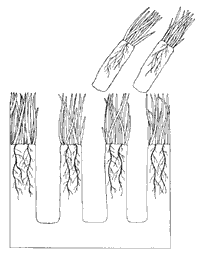 |
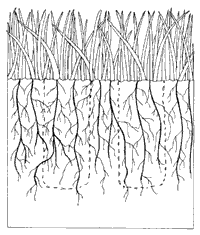
Year's ago, it was believed that lawn aeration opens up the soil under the existing turf grass to introduce air, which is essential to healthy grass plant roots, into it. This then was supposed to help reduce compaction of the soil, which is a chronic problem in American residential landscapes where the air has been compressed out of the soil by foot traffic, heavy rains, heavy equipment at building sites, and loss of organic matter in the soil over time. Grass roots struggle to penetrate this compressed soil in search of moisture and nutrients. Lawns growing in compacted soil are almost always poor looking and high maintenance. What was missing was the understanding that while aerating might be a valuable step in treating a new lawn less than two years old, it is the annual application of organic matter to the surface of the lawn that will help eliminate compaction, improve drainage, and helps roots grow down to the six to twelve inches deep which is the goal for a healthy turf.
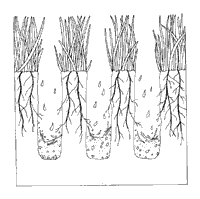 |
Obviously it is more difficult to introduce air into the soil in established lawns than in garden beds where the soil can be turned with a tiller, shovel or trowel before plants are planted. The most direct aerating method was believed to punch holes or slice crevices into the turf with a tool of some kind. The more indirect method which is now considered the best is to topdress the lawn with organic matter that will gradually be incorporated into the soil beneath and improve its texture to reduce compaction. A thin layer of chopped leaves, compost, municipal sludge or similar material rich in humus or a layer of finely shredded leaves deposited by a mulching lawn mower helps the soil retain air. it will be the earthworms who will grab that material and pull it down into the soil which then becomes food for the soil food web.
 |
All about Compaction
Soil compaction is inevitable. Simply walking behind the lawnmower 20 to 30 times a season takes its toll. The pressure of one single footstep of a 150 pound person impacts soil as deep as 15 inches. Riding mowers, parked cars, construction equipment, kids' play--even heavy rain-- cause even more pressure.
Compacted soil is bad for lawns. Grass roots need easy access to water, air, and nutrients in the soil to be able to metabolize energy and grow vigorously. Soil compaction destroys the tiny pockets in the structure of the soil that hold air to stimulate root growth. Grass roots are also stunted and stressed because they can't penetrate the soil. Lack of air spaces also causes soil to drain poorly
Compacted soil is bad for soil life. It hinders the circulation of earthworms and the lack of air stiffles the activity of micro-organisms which enrich the soil. Compacted soil promotes the buildup of thatch as grass roots, starved for air, migrate and accumulate near the surface of the soil, matting and obstructing the rapid decomposition of clippings.
When Does Aerating now make sense
To compensate for compaction in a path through the lawn
To help in overseeding modest area
To help in overseeding in shady area
