
Dethatch If You Have Thatch
Thatch is an accumulation of surface roots, dead plant parts and other debris on the soil at the base of the grass plants. While a thin layer of thatch does not normally present a problem, it must be removed before overseeding to expose bare soil for the new seed.
If the thatch layer is thick, consider renting a dethatching machine or a "power rake" to loosen the thatch and simultaneously scarify the soil without pulling out existing grass plants. With a thin layer of thatch, a very close mowing of the lawn and a brisk raking with a garden rake will do the job. Either way, rake up the loosened thatch and use it as mulch around the yard or store it for later use in a compost bin. See Dethatching Rakes in the Tool Shed.
Deal with Existing Weeds
Many annual weeds die out as fall approaches so they are not a problem when overseeding at this time of year. However, if your turf shows a significant number of broadleaf weeds, which are often perennial and will return next year, remove or kill them before overseeding. Judicious use of the herbicide 2,4-D will efficiently rid the turf of dandelion, plantain, ground ivy and their ilk.
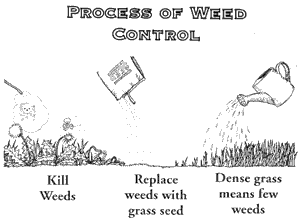 |
Because the vigorous, dense turf that results from overseeding will discourage future weeds of this kind, this is likely to be the only time you will need to use this herbicide. Spray it as directed on the product label at least ten days to two weeks before you plan to sow grass seed. Broadleaf weeds will start to turn brown in three or four days and be completely dead by the end of the 10 day wait. The herbicide will have begun to break down after ten days, so new grass seedlings will not be harmed. What remains is bare soil to be overseeded. See Lawn Weed Control Products in the Tool Shed.
Using Broadleaf Herbicide
Read the label carefully and follow the instructions.
Spray when weeds are actively growing (by late summer weeds have abundant, mature foliage).
Skip one mowing before spraying so weed foliage offers maximum surface for the herbicide application.
Plan to spray 10 to 14 days before the date scheduled for overseeding.
Do not spray when rainfall is expected within six hours.
Do not spray if winds exceed 5 mph to avoid drift onto other plants.
Do not walk on, or allow pets and children to walk on sprayed area for at least 12 hours; a 24 hour wait is better.
Aeration (Optional)
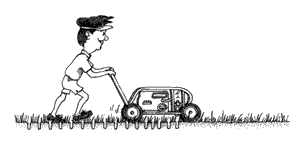 |
Punching holes in the turf soil by means of a mechanical or hand aerator introduces oxygen into the top layer where plant roots grow. Existing grass benefits enormously. It also loosens the soil to make it easier for seeds to contact soil and sprout and new grass seedlings to become established.
Mow Lawn Close and Remove Debris
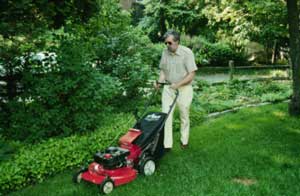 |
The most important step in overseeding is preparing the seed bed with an existing turf already in place. Since the grass seed needs to contact the soil and the new grass seedlings need lots of light to grow, it is necessary to mow the existing grass very short.
Set the mower as low as it will go--so its cuts at about ½ inch--to remove as much foliage as possible without scraping or harming the crowns of the existing plants. If you have a bag attachment collect the clippings in the mower bag. Then rake up the area or go over it with a blower-vac to be sure that no debris covers the bare soil between the existing grass plants. See Grass Rakes in the Tool Shed.
Spread Fertilizer (Optional)
 |
