
Installing the Sod
Working with sod is similar to laying carpeting or tile. Have at least one helper to bring pieces to you as you work, so you do not need to be constantly getting up and down. Fresh sod weighs about 50 pounds a square yard, so have the sod pallets delivered as close to the job site as possible.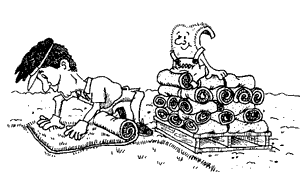 |
Lay the first strips of sod along a walkway or place a 2-by-4 on the ground to establish a straight edge. Use a large knife or a hatchet to cut sod strips or crop them to fit irregular areas. As you lay sod strips, adjust them as bricklayers fit bricks so the end seams of one row are not flush with those of the next row. Fit strips together as tightly as possible. Avoid stepping on the prepared soilbed by placing a board on the first sodded strip to kneel on and move it forward as sodding progresses.
Filling In and Rolling Sod
Snug the edges of each strip of sod against adjacent ones and press down on them lightly so they make uniform contact with soil. Don’t try to stretch a piece of sod to make it close a narrow gap. It will only pull back again. The idea is to prevent the edges from drying out, as they are very prone to do.
Have a bucket of good topsoil nearby to use to put on the seams. Sprinkle the soil along the cracks and brush it in with the back of a rake. This is a good job for a helper. When laying sod on a slope, position the strips at right angles to the slope, to prevent erosion of soil between the pieces of sod from rain or watering. If necessary, hold the sod in place with wooden pegs.
While a roller may be an optional tool in lawn seeding, it is essential to a sodding operation. One or two passes with a rented lawn roller filled with water eliminates irregularities in the ground and assures good contact between the sod and the soil surface, thereby encouraging root growth from the sod into the soil.
Water, Water, Water
Water within 30 minutes of installing new sod. Dehydration is the greatest danger. It occurs quickly along the edges--first along seams where sod meets the sidewalk or the driveway, which radiate heat. Provide at least 1 inch of water from a sprinkler on the new sod at least once a day.
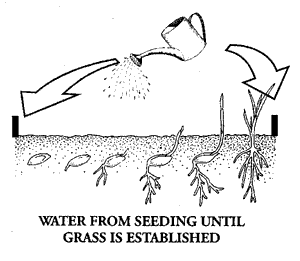 |
Water must soak in several inches--first through the sod, then into the soil--to encourage the roots in the sod to grow into the soil. Continue this daily watering routine when it does not rain generously for at least 3 weeks. Even after this period, a newly sodded lawn needs more watering attention than an established lawn. If brown edges begin to appear, touch these up with additional water to reduce the moisture stress at those points.
