
Yes, some flies can be very beneficial – think Firefly.
Firefly
Fireflies are well known for the summer light show they put on, but these insects have even more to offer. Both the adults and larvae eat insect pests, though the larvae are better predators than their parents. The larvae look like flat beetles with jaws. They emerge from eggs laid in the soil and will feed on slugs, mites, and small crawling insects.
Fireflies rest in the lawn grass during the day, so if you use any broad spectrum insecticide on your lawn, you have eliminated your firefly population.
Damselflies
The damselfly has a small, slender body about 3/8 of an inch long. It likes to hide in flowers, but prowls over the rest of a plant as well. It attacks several insect pests, including aphids, leafhoppers, treehoppers, and many caterpillars and other immature insects.
Attract damselflies by planting wildflowers. This insect is common throughout North America.
Robber Flies
Found throughout North America, the adults and larvae of the robber fly will attack bees, beetles, flies, grasshoppers, grubs, leafhoppers and wasps. The adult is ¼ to 1 1/8 inches long and gray, with long legs and hairy mouth. Some species have slender tapering abdomens; others are so stocky they look like bumblebees. Robber flies over-winter in the soil as larvae.
 |
| © Robin Brickman |
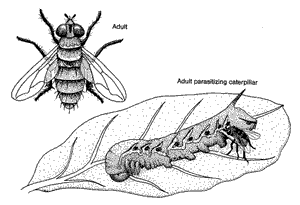
| Tachinid Fly |
The tachinid fly is the most beneficial of all flies. The adult is often mistaken for a housefly, but it is larger, nearly ½ inch long. Their yellow larvae parasitize adult beetles, grasshoppers, caterpillars, armyworms, sawflies, and various other insects.
 |
| © Robin Brickman |
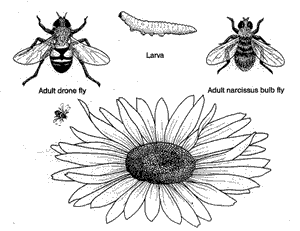
| Hover Fly |
Syrphid Flies (called Hover Flies)
Syrphid flies, also called flower flies or hover flies, resemble small wasps. Like hummingbirds, they appear to be motionless in flight even thought are spinning their wings like crazy. The adult is ½ inch long with short antennae and one pair of wings. The larva is a sightless green or brown maggot. Syrphids spend the winter as larvae. Adults feed on nectar and other sweet fluids and are important pollinators. It’s the larvae that are the predators, eating aphids, leafhoppers, thrips, and a number of other soft-bodied pests.
Plant coreopsis, baby blue eyes, candytuft, morning glory, or oleander to host these beneficials.
