
The annual herb sweet basil (Ocimum basilicum) is a popular plant in residential yards and gardens for good reason. In its various forms it contributes interesting, colorful foliage to the landscape as well as pungent, summery flavor to the kitchen. Basil is available in many shapes and colors, but plants commonly grown as sweet basil and bush basil are best for kitchen use. Purple-leaved varieties are both ornamental and flavorful.
Height and Spread - Basil typically grows from 12 to 24 inches tall. Its square branching stems spread from 20 to 30 inches if it is not pinched or pruned. Lower growing compact bush or globe basils reach only one foot or so.
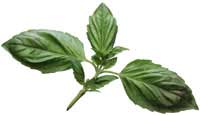 |
Foliage - Sweet basil foliage is a smooth medium green. Individual leaves are slightly crinkly with pronounced veins. some basils have curly leaves. Some have purple leaves, some even speckled purple and green. All basil leaves share a strong pungent aroma.
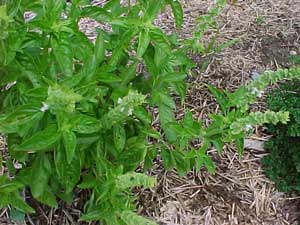 |
Flowers - Left to grow at will, basil develops 1/2 inch white or lavender blossoms in July and August at the ends of its branches, about 8 to 10 weeks after planting. Pinch off the blossoms as they form so that you will continue to get more leaf formation. Let the blossoms go to seed and you stop further leaf development.
Design Ideas For Basil
Use low-growing, mounded globe basil as a border around a flower bed, between stones in a terrace or rock garden or in planters and windowboxes. Interplant purple basils with plants of strong contrasting colors such as yellow or gold marigolds. The green foliage of sweet basil planted alternately with purple basil makes an attractive contrasting border or grouping in a bed or windowbox.
