
 |
Grubs are perhaps the most hated pest insect in the country. They are often blamed for lawn problems in error. This file should help you be sure that your problem is in fact caused by grubs and then if that is the case, we will help you solve that problem once and for all.
“Grub” is a catch-all term for the larval, or worm, stage of many kinds of beetles. May beetles (also called June bugs), Japanese beetles, masked chafers, billbugs, Asiatic garden beetles and others all are grubs in the soil prior to emerging as beetles during the growing season. In the Northeast, Japanese beetle grubs are the most common pests of residential lawns. Masked chafers are most common in the Midwest, and June bugs are most common in the West.
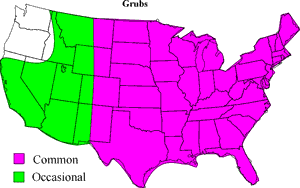 |
| Where Grubs Are Found |
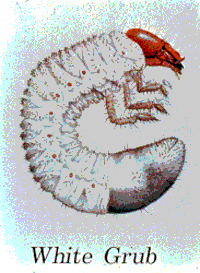
Grubs are plump whitish colored worms that grow 3/4 to 1-1/2 inches long. They have 3 pairs of legs and tan heads with large, brown-black mouth parts. They rest in a characteristic C-shaped curl just under the soil surface in planted areas or turf, where they feed on roots of ornamental plants and lawn grasses. In vegetable gardens grubs are not usually a problem because they are exposed when the soil is frequently disturbed by cultivation and planting. However, they may infest new planting areas that have been established where there was once lawn.
Growth Stages Of Grubs
|
Eliminate Grub Problems For Good Yardeners e-mail me pleading for me to help them “get rid of their grubs”! My answer is seldom satisfying since it is “there is no way to completely get rid of grubs”. The better question is “how can I get rid of the problems that grubs are perpetrating upon your helpless lawn”. The common approach to grub control is to apply an insecticide each year some time in June which then, if applied properly, should kill all the grubs in the root mass of your lawn. Then, if that approach was successful, we perform that routine year after year. Grubs are only a problem because your grass is growing on compacted soil and the root system is only 2 to 3 inches deep. To avoid stress, turfgrass needs space down 6 to 12 inches. Grubs hibernate during the winter months and then they must come up in late spring to nosh grass roots for a few weeks so they then can pupate from grub to adult Japanese beetle or June beetle. If the roots of your grass plants are only 2 inches deep, that is where the grub has to go get his spring snack. It takes only 5 white grubs per square foot in a lawn with only two inches of roots to virtually destroy that lawn if nothing is done. If the root system is down at least 6 inches deep, you can have 15 grubs per square foot and you will see no evidence of their eating the grass roots. We don’t get rid of the grubs. We fix our compacted soil so the turf grass produces more massive roots and the grub population is spread out sufficiently so those brown patches indicating grubs, never again show up.
The grub problem is fixed in the long term if we can fix our compacted soil to allow the roots to grow more deeply. We fix the soil under turf by adding a layer of organic material over the lawn each fall and/or spring. Finely chopped leaves with a mulching mower or used coffee grounds spread at ¼ to ½ of an inch applied over three to five years will serve as the stimulus for the earthworms and soil microbes to break up that compaction. That organic amendment every year serves as food for the “soil food web”, all the creatures living in a healthy soil. So if I had grubs last year, I will probably have grubs this year. I’m just getting started adding a layer of chopped leaves, so I will have to again use an insecticide containing Merit to deal with this year’s problem . I might have to do the same next year as the roots are growing more deeply. After three years, however, you still have grubs, but they are no longer in a situation where their activity causes any visible harm to your lawn ever again. |
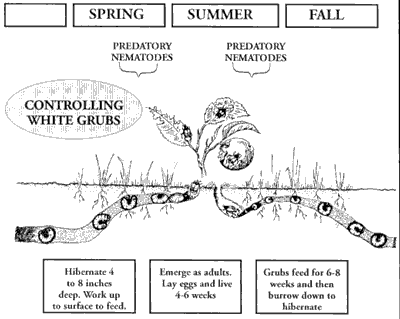
An understanding of a grub’s life cycle--which may span 1, 2, or even to 3 years, depending on the species--is the foundation of a successful control strategy. During the summer the adult beetles leave the soil at dusk and fly about during the night feeding on tree and shrub foliage and mating. At dawn, the beetles fly back to the soil to lay their eggs. The eggs hatch in 2 or 3 weeks, and the new grubs feed on roots and other underground plant parts until early fall. Then they burrow deep into the soil to hibernate below the frost for the winter. As the weather and soil warm up in the spring, grubs migrate back toward the surface to resume feeding on plant roots. They feed all season long and then dig down again to overwinter. Next season they come back up, feed, pupate, and emerge as adult beetles.
