
 |
| © Carroll and Brickman |
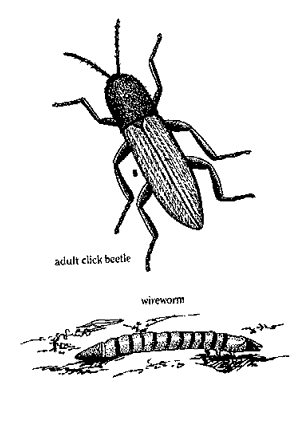
| Click Beetle and Wireworm |
Wireworms (Alaus spp., Limonius spp., Agriotes spp., and others) are the larvae of click beetles. They are 1/3 to 1 1/2 inches long, dark brown to yellowish in color, jointed, hard shelled, and cylindrical. Do not confuse the larvae with millipedes, which have many pairs of legs; wireworm larvae have only three pairs directly behind the head.
Click beetles are about 1/2 - 1 inch long, brown, gray or black. Some of them have dark head spots and wing bands. The adult click beetle is seldom a problem in the landscape, occasionally nibbling on some flowers or leaves. The click beetle gets its name from its ability to throw itself into the air to right itself, making a clicking sound as it does it. They lay their eggs in the soil. Eggs, larvae, and adults over-winter in the ground.
Adult beetles and over-wintering worms become active when the soil temperature reaches 55 degrees. The adults will come to the surface and walk around for a month or so. The wireworms never surface but operate in the top six inches of soil.
Wireworms are found throughout the United States and are especially common on land that is poorly drained, has recently been in sod, or is particularly high in organic matter. Wireworms are often a serious problem in new gardens that have just been established in sod. Generally, one generation occurs in a year, but certain species may require as many as two to six years to mature, which means they hang around and cause trouble for several years.
