
 |
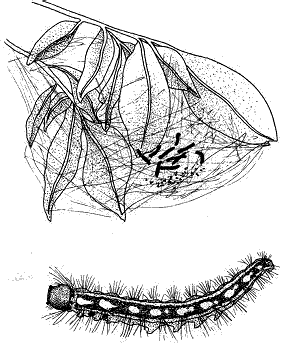
Tent caterpillars will eat the foliage and stems of just about any plant in your landscape. Holes in leaves and chunks taken from along their edges are typical signs of caterpillar attack. Patios or decks lying beneath trees or shrubs containing caterpillar tents are smeared and stained by the brown waste pellets raining down from these tents.
Tent caterpillars can rapidly defoliate a small plant. The caterpillars in a single tent may consume 20% of the foliage of a small tree, and trees infested with several tents are totally defoliated. A single attack rarely kills a tree, but it does reduce growth and makes the tree more susceptible to disease, drought, or other stresses. A healthy tree will usually recover from an attack by leafing out again in midsummer.
Plants Affected
Most common targets:
Alder (Alnus)
Apple (Malus)
Ash (Fraxinus)
Cherry (Especially wild cherry) (Prunus)
Peach (Prunus)
Pear (Pyrus)
Plum (Prunus)
Quince (Cydonia)
Other targets:
Barberry (Berberis)
Birch (Betula)
Cottonwood (Populus)
Elm (Ulmus)
Hawthorn (Crataegus)
Maple (Acer)
Oak (Quercus)
Poplar (Populus)
Rose (Rosa)
Willow (Salix)
Witch Hazel (Hamamelis)
