
Copper dust is a light-green powder that does double duty in the garden, it's both an insecticide and a fungicide, with copper sulfate as the active ingredient that stops fungal disease on contact. It's a go-to for blight, downy mildew, and leaf spot on tomatoes, potatoes, and fruit trees, but it isn't safe for every plant, and dust isn't always the better choice over a liquid spray. Here's what copper dust actually treats, which plants to keep it away from, and how to apply it without wasting product or hurting your garden.
In short:
• Copper dust (7% copper sulfate) controls early/late blight, downy mildew, leaf spot, and anthracnose on contact - reapply every 7–10 days or after rain.
• Avoid it on copper-sensitive plants like bromeliads, ivy, and annual geraniums - it can scorch or discolor foliage.
• It's approved for organic use and safe up to the day of harvest, but wear gloves and a mask when applying - copper dust is an eye, skin, and lung irritant.
• Dust works best for dry, still conditions on dense foliage; spray gives more even coverage on tall plants or in light wind.
Copper Garden Dust by Bonide
Bonide Garden Dust
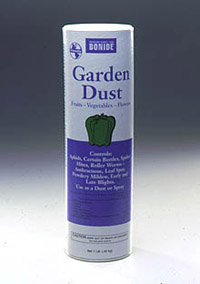 |
This product is both an insecticide which kills insects and a fungicide which controls fungal diseases. The active ingredient that controls fungal disease is copper from copper sulphate.
The dust is colored light green so it does not show up too much after it is applied. The container is itself a dusting device or you can put the material in a dusting tool To use the can just shake it to fluff up the powder. Then press the sides of the can with your fingers, using a rapid motion for a fog effect. Cover the foliage with a thin film of dust, both top and undersides of the leaves.
You can use this product as a spray, but there are other liquid fungicides that are easier to use.
You apply this when the fungal disease appears or when you expect it to appear based on last year's experience. Then apply it again every 7 to 10 days or after a rain until control is reached.
Bonide Copper Dust
 |
BONIDE COPPER DUST OR SPRAY (BORDO)
7% Copper sulfate for controlling early and late blight, leaf spots, downy mildew, anthracnose and certain other fungal diseases on vegetables, ornamentals, flowers and fruits.
Won't burn plants.
Is Copper Dust Safe to Use?
Copper dust can irritate your eyes, skin, and lungs, so wear gloves and a dust mask when you apply it, and pick a still day so it doesn't drift back toward you. Wash your hands and any exposed skin when you're done. Keep pets and kids off the treated area until the dust settles, usually within an hour.
Plants That Don't Tolerate Copper Dust
Bromeliads, ivy, and annual geraniums are known to react poorly to copper-based fungicides and can show leaf scorch or discoloration after treatment. If you're not sure about a specific plant, test a small, hidden section of foliage first and check for damage after 48 hours. Most vegetables, fruit trees, and ornamental shrubs tolerate copper dust well.
Copper Dust vs. Copper Spray — Which to Use
Both forms use the same active ingredient, copper sulfate - the difference is application. Dust goes on dry and tends to work best on dense, low foliage in calm, dry conditions. Spray is mixed with water and gives more even coverage on taller plants or when there's any wind. Choose based on your plants and the weather that day, not one over the other by default.
Is Copper Dust Organic?
Yes, copper dust is approved for organic gardening and can be used on edible crops right up until the day of harvest. It's one of the few fungicides organic growers can rely on for blight and mildew control, since most synthetic alternatives aren't organic-certified. Always check your specific product's label to confirm its certification.
Copper Dust FAQ
Is copper dust safe to breathe?
No - copper dust is an eye, skin, and respiratory irritant, and inhaling it can cause temporary irritation to your nose and throat. Wear a dust mask and gloves when applying, and apply on a still day so it doesn't drift back toward you. Wash your hands and any exposed skin after use. Keep pets and kids off treated areas until the dust settles, usually within an hour.
What plants should not be treated with copper dust?
Bromeliads, ivy, and annual geraniums are known to react poorly to copper-based fungicides and can show leaf scorch or discoloration after treatment. If you're unsure about a specific plant, test on a small, hidden section of foliage first and check for damage after 48 hours. Most vegetables, fruit trees, and ornamental shrubs tolerate copper dust well.
Is copper dust the same as copper fungicide spray?
They share the same active ingredient - copper sulfate, but the application differs: dust is applied dry, while spray is mixed with water. Dust tends to work better on dense, low foliage in calm, dry conditions, while spray gives more even coverage on taller plants or when there's any wind. Both control the same range of fungal diseases, so the choice comes down to your plants and the weather that day.
Is copper dust approved for organic gardening?
Yes, copper dust is approved for organic gardening and can be used on edible crops right up until the day of harvest. It's one of the few fungicides organic growers can rely on for blight and mildew control since most synthetic alternatives aren't organic-certified. Always check your specific product's label to confirm its organic certification status.
Bottom Line on Copper Dust
Copper dust earns its place in the garden shed as a fast-acting, organic-approved fix for blight, mildew, and leaf spot, but it isn't a blind-apply-everywhere product. Check your plant against the sensitivity list before dusting, gear up with gloves and a mask, and reapply every 7–10 days or after rain to keep protection active through the growing season. If you're treating a taller plant or working in any wind, switch to a copper spray instead for more even coverage.
