
 |
Evergreen azaleas are the kind of shrubs that earn their place in the yard twice over - once in spring when they explode into bloom, and again through winter when their foliage holds color while everything else goes bare. Unlike deciduous azaleas that drop their leaves each fall, evergreen varieties keep their foliage year-round, though it often turns bronze or reddish in cold weather. This page covers what makes an azalea evergreen, which varieties and zones work best, and what to expect from these shrubs through every season.
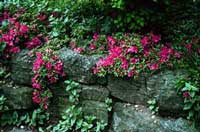
Azaleas (Rhododendron sp.), members of the rhododendron family of shrubs, are extremely popular for home landscapes because of their elegant spring masses of colorful funnel-shaped flowers. Among the most valued are those azaleas from Asia and the hybrids that have been bred from them. Their evergreen foliage also offers winter interest in residential yards. Although all azaleas are difficult to grow where soil is clayey, soil pH is alkaline or where summers are very hot, they are reliable, carefree shrubs when their environmental requirements are met.
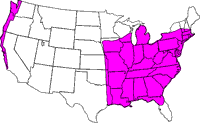 |
| Area Where Azalea Is Native |
Most evergreen azalea varieties have southern backgrounds and are coldhardy only as far north as Kentucky and Virginia and along the Atlantic coast to Southern New England (zone 6). While there are exceptions, most can not withstand winter temperatures lower than -10°F.
Size and Growth Habit of Evergreen Azaleas
Evergreen azaleas tend to be compact and bushy. They grow from 4 to 6 feet or more, depending on the variety. Individual plants are often as wide as they are tall.
Evergreen Azalea Foliage and Winter Appearance
Evergreen azaleas offer fall and winter interest as well as spring beauty. Their leaves are usually about 1 inch long, elliptic to lance-shaped and bristly to the touch. Medium to dark green in the summer, they turn bronze or reddish brown in the fall and through the winter.
 |
Flowers and Color Range
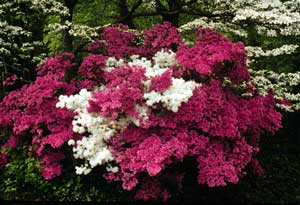
Azalea flowers are funnel-shaped with flaring petals. Some varieties boast semi-double and double blossoms, and are almost unrivaled for their spectacular spring show. Flowers 1 to 3 inches in diameter range in color from white through pink, red or lavender, and even shades of yellow, salmon, apricot or orange. They are often carried in loose clusters along the stems, literally covering the shrubs in a gorgeous display.
Growing Zones and Basic Requirements
Zones 5 - 8, part shade, and acidic well drain soil.
